Transactional Analysis: Tools for Healthy Workplace Dynamics
Ever found yourself in a perpetual cycle of miscommunication with a colleague? Do certain interactions at work repeatedly leave you feeling frustrated, misunderstood, or even like a different person entirely? You're not alone. The workplace, a crucible of diverse personalities and pressures, often highlights our communication shortcomings and ingrained behavioral patterns, frequently without us understanding their deeper causes. This is where Transactionele Analyse, or Transactional Analysis (TA), offers a powerful framework to decode, understand, and transform these intricate dynamics, fostering truly healthy workplace environments.
Transactional Analysis, a profound theory rooted in humanistic psychology, provides invaluable insights into our personality, personal development, and, critically, how we interact with others. It answers fundamental questions: Who are you? How did you become this way? And how do your interactions unfold? By illuminating the hidden currents beneath everyday exchanges, TA equips individuals and organizations with practical tools to improve collaboration, leadership, and overall well-being.
Unraveling Workplace Mysteries with Transactional Analysis
At the heart of many workplace struggles lies a lack of awareness about our own and others' behavioral patterns. We "meet ourselves" in contact with others, often bumping up against our own limitations or biases. Have you ever noticed yourself reacting to a senior manager as if they were a critical parent, or conversely, finding yourself constantly "parenting" a junior colleague? These aren't random occurrences but rather predictable patterns that Transactional Analysis helps us identify and understand.
TA provides a lens through which to observe and analyze both verbal and non-verbal interactions, and their profound impact. It explains why we might revert to childlike behavior with certain individuals, or instinctively adopt an overprotective or controlling stance with others. Without this understanding, we're often left feeling helpless, trapped in cycles of ineffective communication. Transform Your Communication with Transactional Analysis is precisely what TA enables, by giving us the power to recognize these patterns and, crucially, to change them.
Core Models of Transactional Analysis for Team Harmony
Transactional Analysis offers several accessible models that demystify human interaction. Three foundational concepts—Ego States, Transactions, and Psychological Games—are particularly potent for improving workplace dynamics:
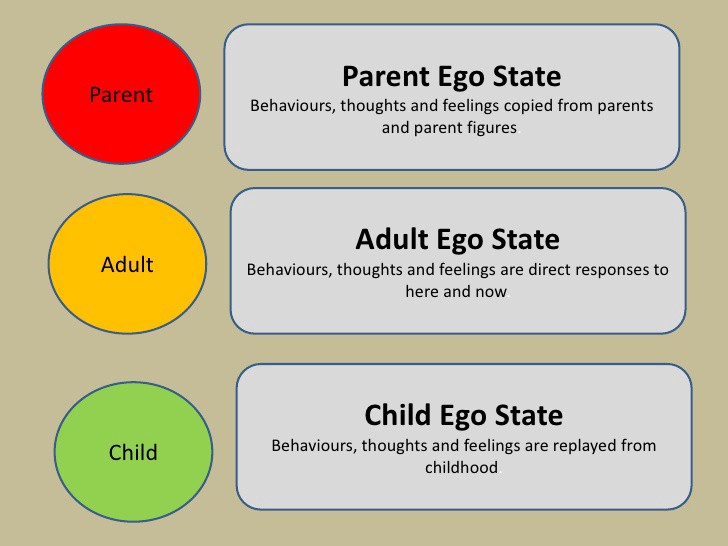
- Ego States (Parent, Adult, Child): This model posits that we all operate from three distinct "ego states" which influence our thoughts, feelings, and behaviors:
- Parent Ego State: Reflects learned behaviors, thoughts, and feelings copied from parents or parental figures. In the workplace, this can manifest as a Critical Parent (e.g., micromanaging, finding fault) or a Nurturing Parent (e.g., over-helping, offering unsolicited advice). While some 'Parent' traits can be valuable (like setting standards), an overreliance can stifle initiative or foster dependency.
- Adult Ego State: This is our rational, objective, problem-solving state. It processes information, evaluates options, and makes decisions based on facts and current reality. An "Adult" approach to workplace communication is characterized by calm, logical discussion and a focus on solutions rather body language or emotional reactivity.
- Child Ego State: Represents feelings, thoughts, and behaviors from our childhood. This can be a Free Child (creative, spontaneous, enthusiastic – great for innovation!) or an Adapted Child (compliant, rebellious, anxious, or manipulative – leading to passive-aggressive behavior or people-pleasing).
Understanding these states helps individuals recognize which part of themselves (or others) is driving a particular interaction. For instance, a manager operating from a Critical Parent state might inadvertently trigger an Adapted Child response (resentment or defensiveness) in their team member, hindering effective collaboration.
- Transactions: These are the basic units of social interaction – an exchange between two people. By analyzing which ego states are involved in a transaction, we can predict its outcome.
- Complementary Transactions: Occur when the response comes from the expected ego state (e.g., Adult-Adult problem-solving). These lead to smooth communication.
- Crossed Transactions: When the response is unexpected (e.g., an Adult-Adult question met with a Parent-Child answer). These often lead to communication breakdowns and conflict.
- Ulterior Transactions: These involve a hidden message, often leading to misunderstandings and the setup for "games."
In the workplace, recognizing crossed transactions is crucial for de-escalating conflicts and steering conversations back to productive, Adult-Adult problem-solving.
- Psychological Games: These are repetitive sequences of ulterior transactions that result in a predictable, negative "payoff" for all involved. Think of the colleague who constantly plays "Yes, But..." to avoid taking action, or the team leader who sets others up to fail so they can then play "I Told You So." These games waste time, erode trust, and prevent genuine problem-solving. TA provides a framework to identify these games, understand their underlying motivations, and most importantly, how to stop playing them.
Breaking Free from Patterns: Life Scripts and Autonomy
Beyond individual interactions, Transactional Analysis delves into our deeper motivations and overarching life patterns through the concept of the 'Life Script' (or 'levensscript'). This is an unconscious life plan or blueprint that we develop in childhood, often influenced by early experiences and messages from caregivers. Our life script dictates how we tend to respond to situations, the roles we play, and even the outcomes we repeatedly experience in our personal and professional lives.
For example, someone with a "Be Perfect" script might struggle with delegation, overwork themselves, and be overly critical of others' mistakes. Conversely, a "Please Others" script might lead to difficulty setting boundaries, taking on too much, and avoiding necessary confrontations. In the workplace, these scripts can manifest as recurring conflicts, career stagnation, or chronic stress. Unlock Your Life Script: Change Recurring Behavior with TA offers the path to profound personal and professional growth.
By bringing these unconscious scripts to conscious awareness, TA empowers individuals to challenge and rewrite them. This process leads to greater autonomy – the capacity for awareness, spontaneity, and intimacy. In the workplace, an autonomous individual is able to respond to situations authentically, rather than reactively, leading to more genuine collaboration, effective leadership, and personal satisfaction. They can break free from self-defeating patterns, choose different positions in interactions, and transform difficult situations into opportunities for growth.
Practical Applications of Transactional Analysis in Organizations
The beauty of Transactionele Analyse lies in its practicality. It's not just a theoretical framework; it offers a suite of tangible tools that directly help people in companies and organizations cooperate and communicate in healthier and more effective ways. Applied Transactional Analysis in organizations often involves:
- Team Coaching: TA helps teams understand their collective dynamics, identify underlying tensions, and move beyond unproductive patterns. By recognizing ego states, transactions, and games within the team, coaches can guide members towards more Adult-Adult interactions, improving cohesion, problem-solving, and overall performance.
- Leadership Development: For leaders, TA provides critical self-awareness. It helps them understand their own leadership style's impact, recognize when they might be operating from a less effective ego state (e.g., Critical Parent), and learn to foster an environment that encourages Adult-Adult interactions. This leads to more authentic, empathetic, and effective leadership.
- Conflict Resolution: By providing a clear map of interpersonal dynamics, TA enables individuals to depersonalize conflicts, analyze the ego states involved, and strategize for more constructive resolutions.
- Communication Training: TA enhances communication skills by teaching individuals how to identify ego states, initiate complementary transactions, and avoid psychological games, leading to clearer, more efficient, and respectful exchanges.
- Introductory & Advanced TA Courses (TA 101): Many organizations offer basic TA courses, often referred to as TA 101, which are globally certified. These courses cover the fundamental TA concepts, providing employees and managers alike with a foundational understanding of this powerful approach. Advanced courses then build upon this knowledge for deeper application.
Whether addressing unconscious dynamics between colleagues, fostering more effective leader-team relationships, or simply helping individuals navigate their personal development within a corporate structure, TA offers tailored solutions to meet specific organizational needs. It helps uncover the "undercurrents" in relationships and enables people to align communication and actions with the developmental needs of their colleagues, leading to a more engaged and productive workforce.
Conclusion
Transactionele Analyse provides an indispensable compass for navigating the complexities of human interaction in the workplace. By offering profound insights into our personalities, communication patterns, and underlying motivations, TA empowers us to move beyond reactive behaviors and into a space of conscious choice. Embracing TA's models—from understanding ego states and transactions to uncovering life scripts—allows individuals and teams to break free from entrenched, unproductive cycles. The result is not only enhanced communication and reduced conflict but also the cultivation of a truly autonomous, aware, and healthy workplace where every individual can thrive. It's about transforming challenging dynamics into opportunities for growth, leading to more fulfilling careers and a more cohesive organizational culture.